

Geothe Zertifikat 4 All
Add a review FollowOverview
-
Founded Date June 18, 1914
-
Sectors Restaurant
-
Posted Jobs 0
-
Viewed 257
Company Description
What’s The Current Job Market For B1 Certificate Professionals?
The Importance of a B1 Certificate
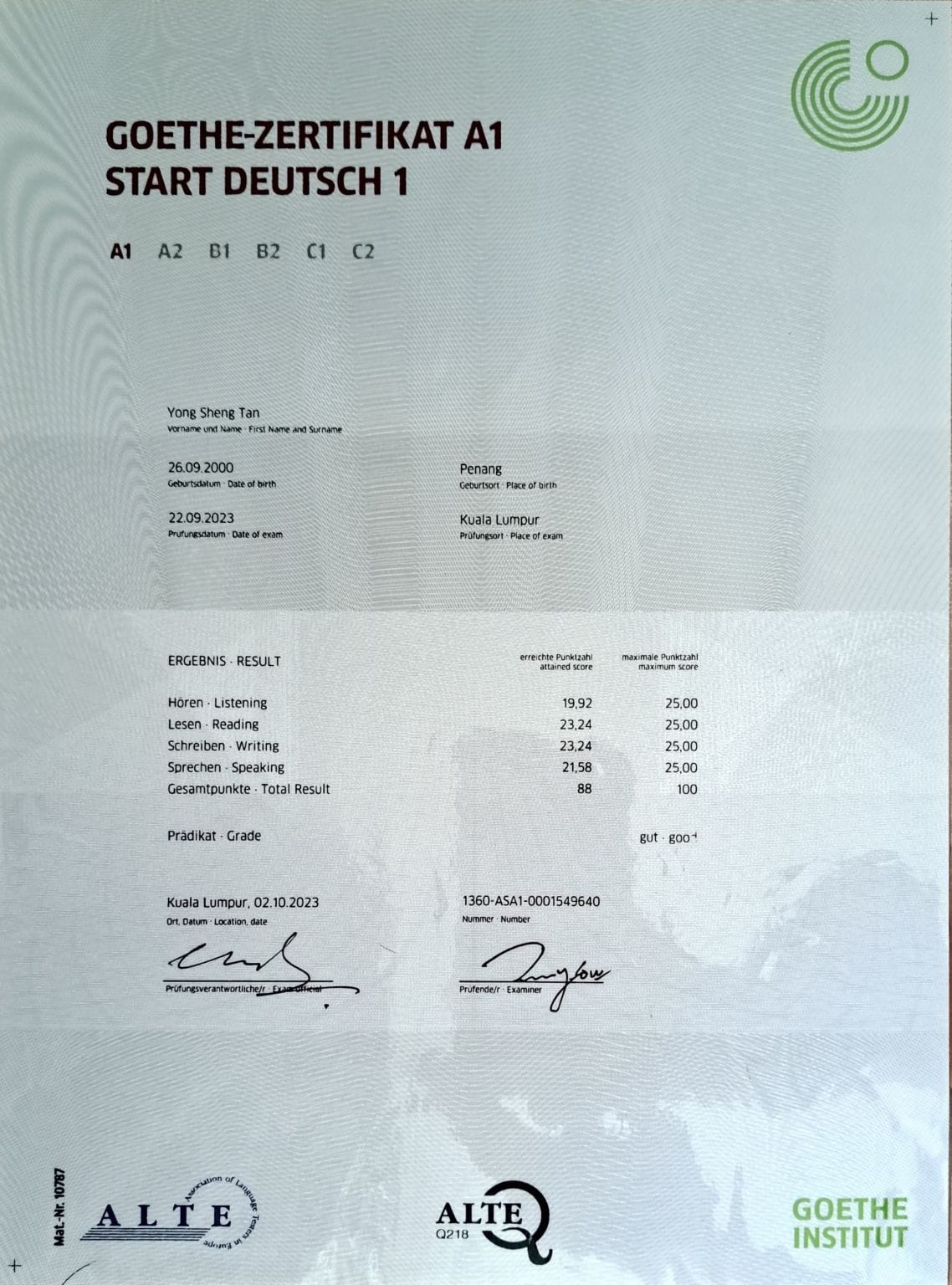 Having a b1 certificate is crucial for many reasons. It is essential for you to clear important “thresholds”. For instance, it is one of the prerequisites for applying for a Settlement permit or Naturalization.
 The b1 certificate shows that you can grasp the key aspects of a standard input on topics that are commonly discussed at school, work and at leisure. You can also talk about events and experiences, and give brief explanations.
A Language Area
The B1 level corresponds with the third component of the six-part European Framework of Reference for Languages. At this level, a student is competent in the use of basic vocabulary and structures. They can also understand the most important points of regular input on topics that they encounter regularly at work, school or at leisure. They can also provide a brief description of their own opinions, experiences and goals.
This is important because it shows that a learner can converse in conversational conversations that are simple and about topics that are familiar to them. This level also indicates that a student is able to read basic factual text, such as brochures and advertisements, and understand the main aspects of TV or radio news programs. It is important because it gives a student the ability to communicate with natives in everyday situations.
A b1 certification is important for anyone who plans to pursue an apprenticeship in Germany. It increases the likelihood of securing an employment opportunity since many employers expect their apprentices have the necessary language skills. The B1 certificate is required to obtain a German settlement permit. This is because German authorities require all foreign citizens to possess a certain amount of German.
To obtain the B1 certification, candidates must take a course to prepare for the exam. This can be completed in an adult education center, the Goethe-Institut, or a language school. It is recommended that learners complete the course in a group so that they can develop their conversational and listening skills with other people.
The courses for preparation are offered at different dates throughout the year. Each of the three tests is comprised of writing, reading and listening. The CILS administers tests in more than 300 locations across the globe. They are designed to prepare students for the B1 examination, which is held every year twice. The exams are based on the CEFR. During the preparation course, students can also improve their vocabulary and grammar. This will help them score better in their final exam.
Language area B
This is the level that bridges between A1 and B2. A person with a B1 language certificate can comprehend the major points of clear standard input on familiar matters regularly encountered in work, school or at leisure. They can also write simple, connected texts on subjects that are familiar or of personal interest. They can write about experiences, events, dreams, hopes and aspirations, and provide short explanations of plans and opinions.
This is an intermediate level and the third of the six levels on the Common European Framework of Reference for Languages (CEFR). A B1 certificate is an essential qualification that will benefit you in your professional and everyday life. It is crucial for your integration into Germany and can open a lot of possibilities for you. For instance, it’s often a condition for an application for a Settlement permit or Naturalization. In addition, many employers are looking for a good language proficiency and include it in their job adverts.
The B1 exam can be conducted in adult education centers near your home or at the Goethe-Institut or at testing centers for language such as Inlingua. The cost of the exam can vary from 130 to 255 euro depending on the service provider. The test can be repeated at any time you want.
Those who have reached the B1 language level are able to communicate with native speakers on familiar subjects. They are also able to read basic texts and understand the basics of information found in newspapers, advertisement or other media. Additionally, they are able to send short messages or emails about their preferences and needs. A B1 certificate is ideal for those who want to move on to the next stage of language learning.
A B1 certificate can help you find an improved job and integrate yourself more easily into German society. It will help you achieve the desired citizenship of Germany. In addition you will be able to tackle all kinds of issues in your everyday life in Germany much more easily and efficiently. You will be able, for example, to negotiate with landlords, or handle invoices from insurance companies and government agencies.
Language area C
A B1 certification can be a key step in integrating into Germany. A good German language level makes everyday life easier, for example when shopping or communicating with the authorities. It also assists in working and learning. A B1 level of proficiency is also required to apply for the naturalization permit or settlement permit in Germany.
The Goethe-Zertifikat B1 exam is for young and old people. It proves that the individual is able to speak independently in their German and is able to use it on their own in normal situations. It corresponds to the third level of the Common European Framework of Reference for Languages (CEFR). This is the intermediate level. This level permits the speaker to describe events and experiences in German and provide short explanations. They can discuss future plans and provide information about leisure activities, school and work. They can speak about their hopes, dreams and ambitions.
At this point the student can take part in lengthy discussions and lectures even with no English subtitles. They are able to write and read in depth about topics that interest them. They also can comprehend jokes and implicit meanings in conversations and write more structured text. Additionally, they can follow complicated news reports. They can speak naturally and fluently in conversations. They can communicate with strangers and utilize the language for professional purposes. They are able to read and comprehend difficult materials, such as literary or technical texts.
Language area D
You can communicate in simple situations, like situations that might arise when traveling in an areas where this language is spoken. You can talk about experiences, occasions, dreams, and goals and give short declarations and explanations of personal beliefs and plans.
If it is delivered in a slow and clear manner it is possible to understand the main points in a standard speech covering familiar topics, such as those encountered at work, at school or during leisure time. You can also understand the primary message of radio or TV shows on current affairs or subjects of personal interest, as long as the delivery is clear and slow.
In terms of academic qualifications, reaching level B1 corresponds to completing an intermediate-level French language course. This level is also comparable to other international certifications such as the Cambridge English Preliminary (PET) and the Goethe-Zertifikat B1 for German. It can also open doors to various professional and academic opportunities in which the ability of speaking and comprehending basic French is required or advantageous. DELF B1 is not regarded as a degree in academics and is not a assurance of access to specific universities or jobs. To apply for DELF B1, you will have to submit your latest 4 school reports proving that you studied the foreign language in your school days at a level that entitles university entrance. You can also submit an official certificate from a recognised language institution.